

Will my dog get along with a new Frenchie puppy?
The French Bulldog of Colorado
Yes, your dog will very likely accept a new puppy. About 75% of the families who take home a puppy from us are adding a second or third dog to the household.
Of all those placements, exactly one did not work out. The resident dog was a grumpy older male, and the owners were anxious going in. Dogs read the people around them, and tension at the other end of the leash makes a first meeting harder than it needs to be.
Most dogs fall in the middle of the bell curve
Every owner thinks their dog might be the exception. Most are not. Picture a bell curve: a few dogs love a puppy on sight, a few truly want no part of one, and the large middle is "pretty okay with it."
That middle group tolerates the puppy, plays some, and sets limits when the puppy pushes too far. That is normal, and it is what a good adjustment looks like. Most of them become great friends. Some are insta-besties, and some take a couple of days to adjust.
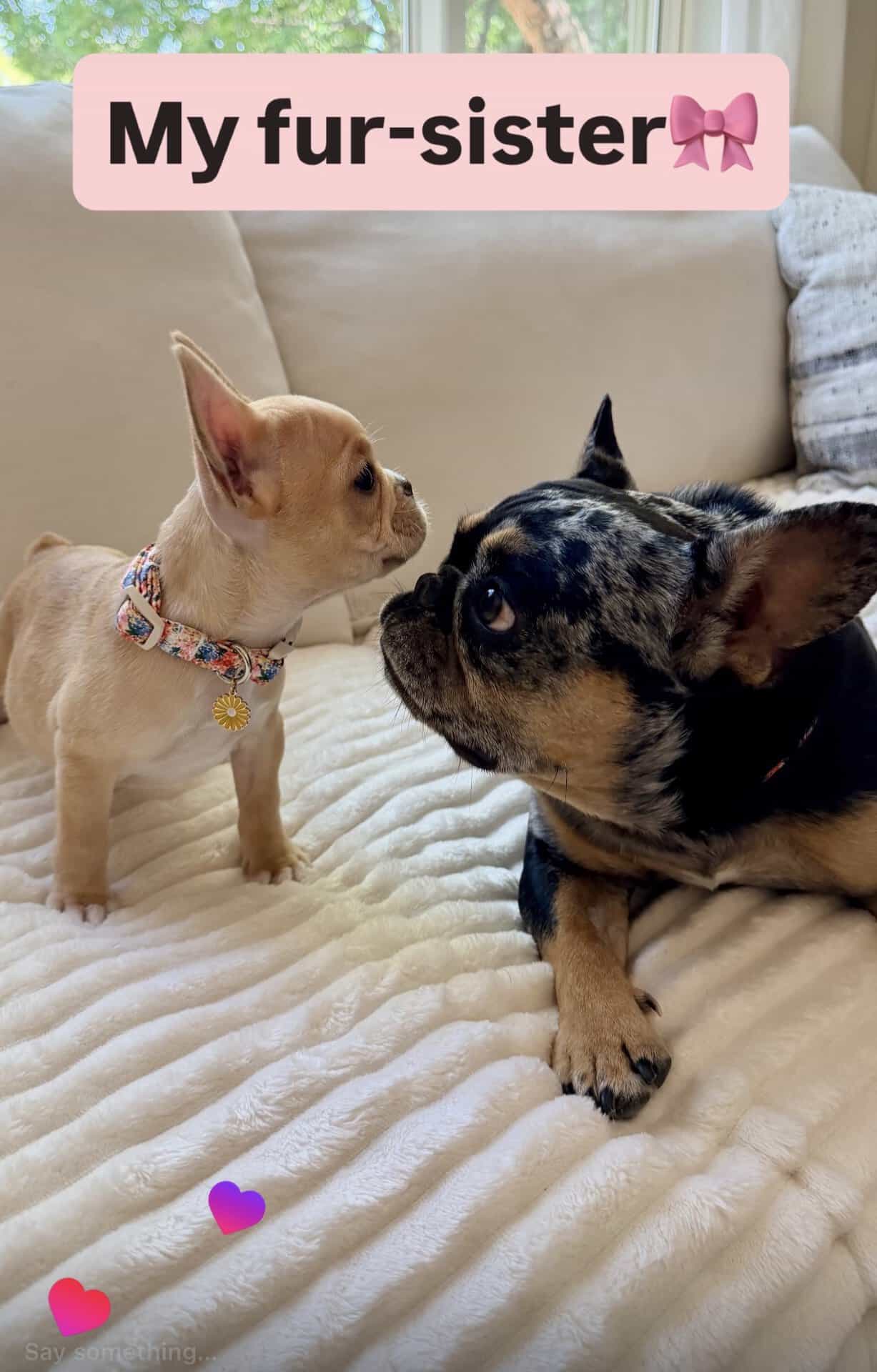
Growling is communication. Snapping is not okay.
A growl from your adult dog is not a problem. It is your dog telling the puppy, "That's enough." Do not punish the growl; it is the warning system working.
Most puppies respond to a growl by backing off and leaving the adult alone. That is how they learn the house rules from the dog who already lives there.
Snapping is different. If your dog snaps, step in and separate them.
It's okay for an adult dog to growl. That's just communication.Dr. Amanda Williams, PharmD
When they need a break, give them one
Puppies have endless energy. Adult dogs do not. When either one has had enough, put the puppy in the playpen and let everyone reset. It's good to set boundaries and have the puppy rest.
This is management, not punishment. Short, supervised time together with breaks in between builds a better relationship than forcing them to share space all day.
Common questions
My dog is a big breed. Is that a problem?
No. Our puppies live with Boxers, Cane Corsos, Great Danes, pit bulls, and German Shepherds, and they have all adjusted well. In most of these homes, the Frenchie decides it is the boss.
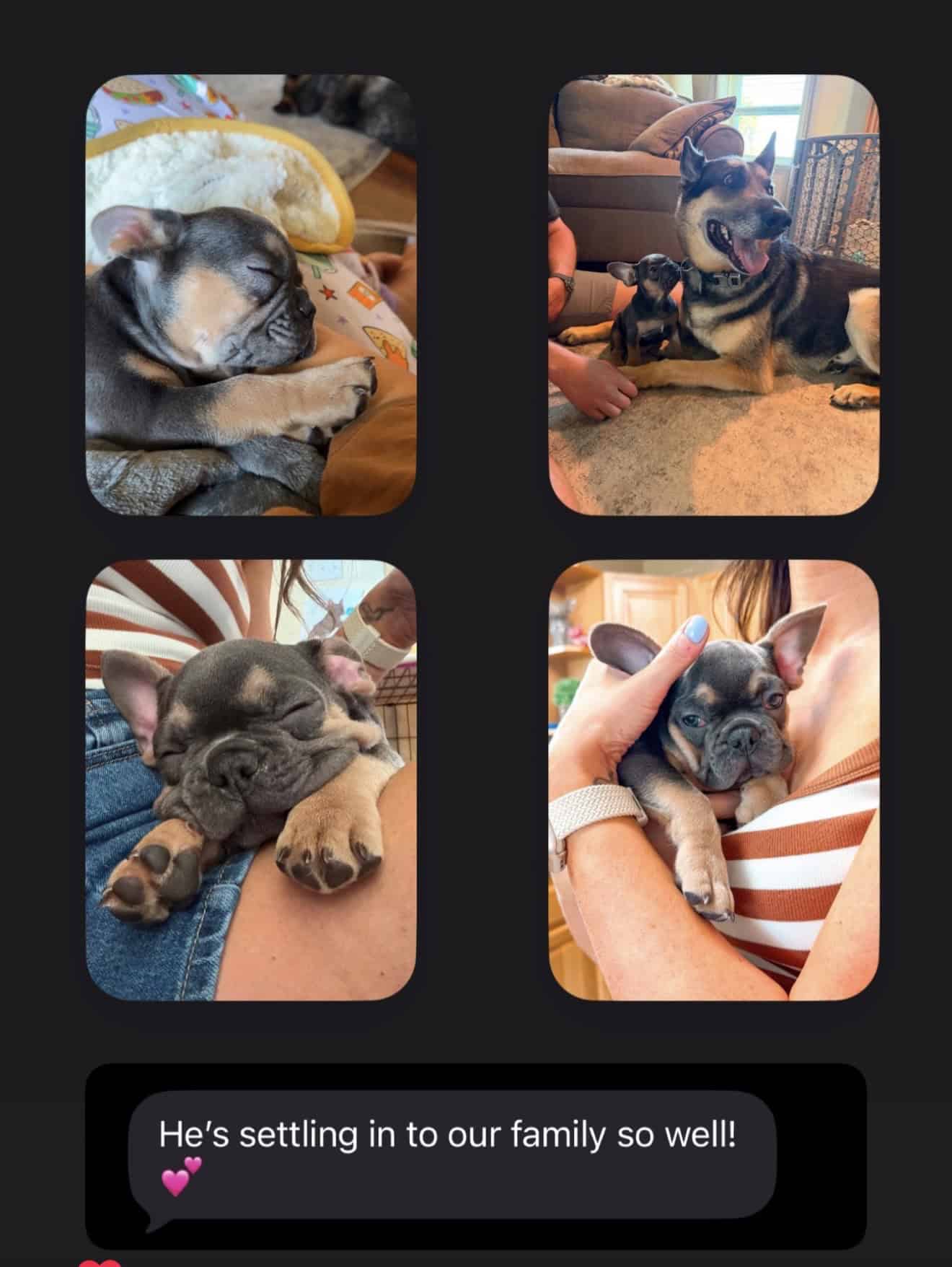
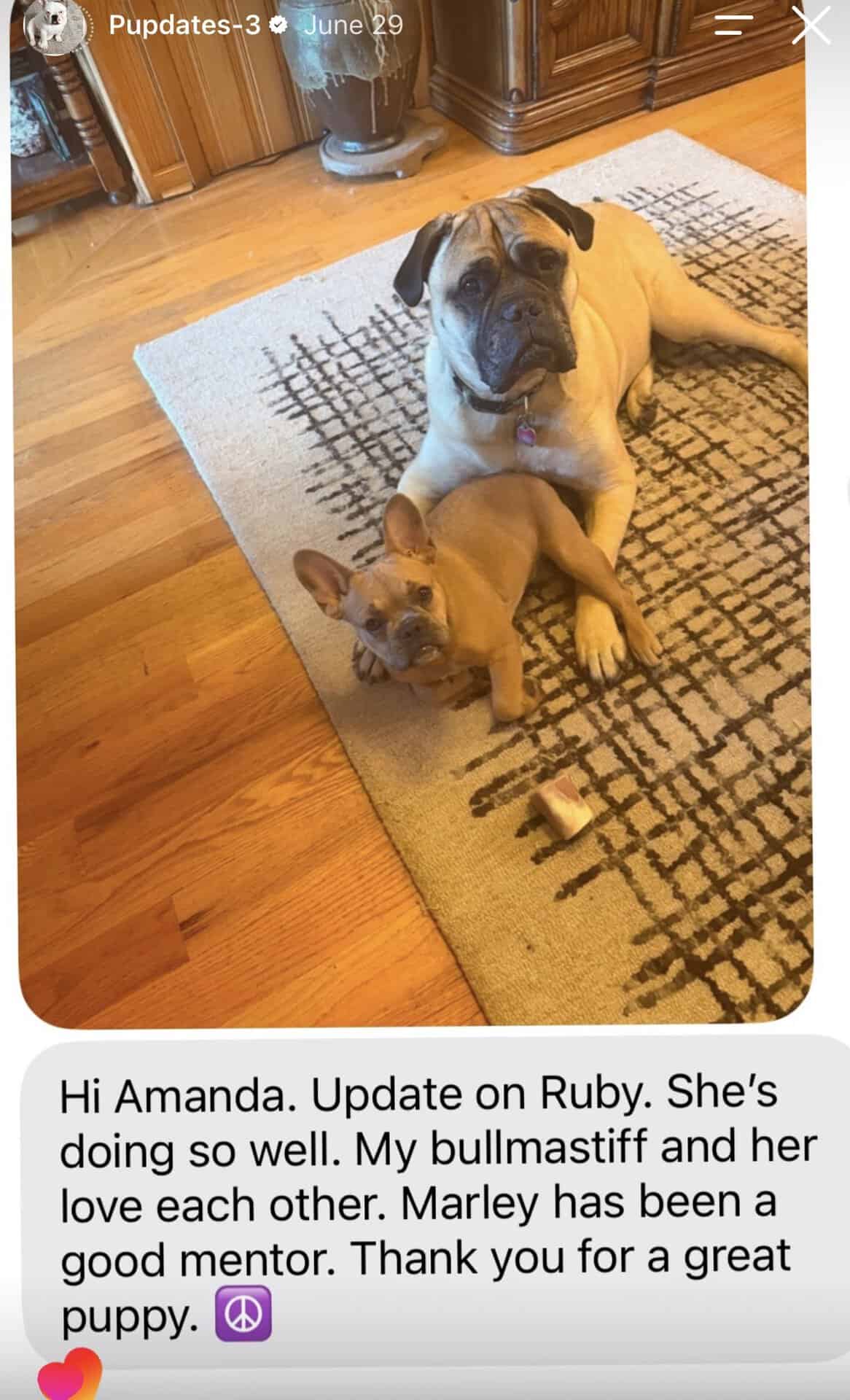
Size does matter for the first few weeks. A large dog can knock over or step on a small puppy by accident, so supervise play until the puppy is bigger and steadier.
My dog barks and reacts on a leash. Will that happen with the puppy?
Not necessarily. Leash reactivity and behavior at home are two different things. On a leash, a dog cannot move away from what worries it, so it barks to make the other dog leave. At home, in familiar territory, most of those same dogs are relaxed.
Make the first meeting at home, not on a walk. Keep your dog off leash or on a loose leash, and let them sniff the puppy through the playpen first. Judge your dog by how it acts in your house, not on the sidewalk.
How should the first day go?
Don't make it a big event. On a nice day, the backyard is a great place for the first meeting. There's plenty of room, and nobody feels cornered.
Some families bring their dog along when they pick up the puppy. Your dog stays in the car, since I can't have visiting dogs out on my property, and they ride home together. Others leave their dog at home so they have time to bond with the puppy on the drive back. Either way works. You know your dog and yourself, so make the best decision for you.
Once you're home, let your dog check the puppy out through the playpen panels. Your dog may sniff, growl, or walk away. All of that is normal. Then give them short, supervised visits, and when either one needs a break, the puppy goes back in the playpen.
Will my dog feel jealous or replaced?
Most dogs don't get jealous. I have a whole house full of Frenchies, and when I add another one, they're like, "Oh, another one." Keep your dog's routine the same: same walks, same meals, same spot on the couch.
Some dogs are more possessive of their things, and that's absolutely fine. If your dog doesn't want to share a favorite chew toy, it doesn't have to. Just separate those things out.
My dog is a senior. Is a puppy too much?
Usually not. A lot of older dogs get a second wind with a puppy around. It can help them feel like a puppy again, and the extra activity lifts their overall mood, just like we feel better when we move more. The key is protecting their rest. A senior dog shouldn't have to put up with a puppy hanging off their ears all day, and that's what the playpen is for.
Can they share food, toys, and beds?
Some dogs like to protect their toys. Instead of leaving toys out for a free-for-all, put them in the playpen and give each dog its own time in there to play. If your dogs prove they share really well, they can have toys out together, but always keep an eye on it.
Food is simple: feed them separately. We don't like people's hands in our plates either, so every dog gets its own space and its own bowl. Beds they usually sort out themselves.
Where should the puppy sleep?
Not alone in a crate, at least not at first. There's no alone space at our house, so asking a young puppy to suddenly sleep by itself is a big transition and a lot of stress. Puppies who go home at 13 to 14 weeks may handle it more easily, depending on the pup.
What I recommend:
- If you're a light sleeper, let the puppy sleep with you.
- If not, put a soft airline-style travel crate on your bed so the puppy doesn't feel alone.
- Or set a crate right next to your bed.
Crate training is a good idea, but it isn't the first thing to do with a young puppy who has never been alone.
Does it matter if they're the same sex?
Any combination can work. If you want to be as certain as possible that everyone will get along, a male and a female is the best combination.
If you plan to spay or neuter at some point, even just one of them, they tend to all get along. Two males can work, too. I have intact males who run with my neutered male, and some of my intact males even run together. The trouble starts when a female is in heat. We've had several families successfully bring home two males.
Two females usually get along. They can get a little grumpy with each other when they're cycling. I was born into the dog world, but when I took a break from breeding, I had two Frenchie girls, Darcy and Paris. We just called them "the girls." They were total besties.
Real households, real results
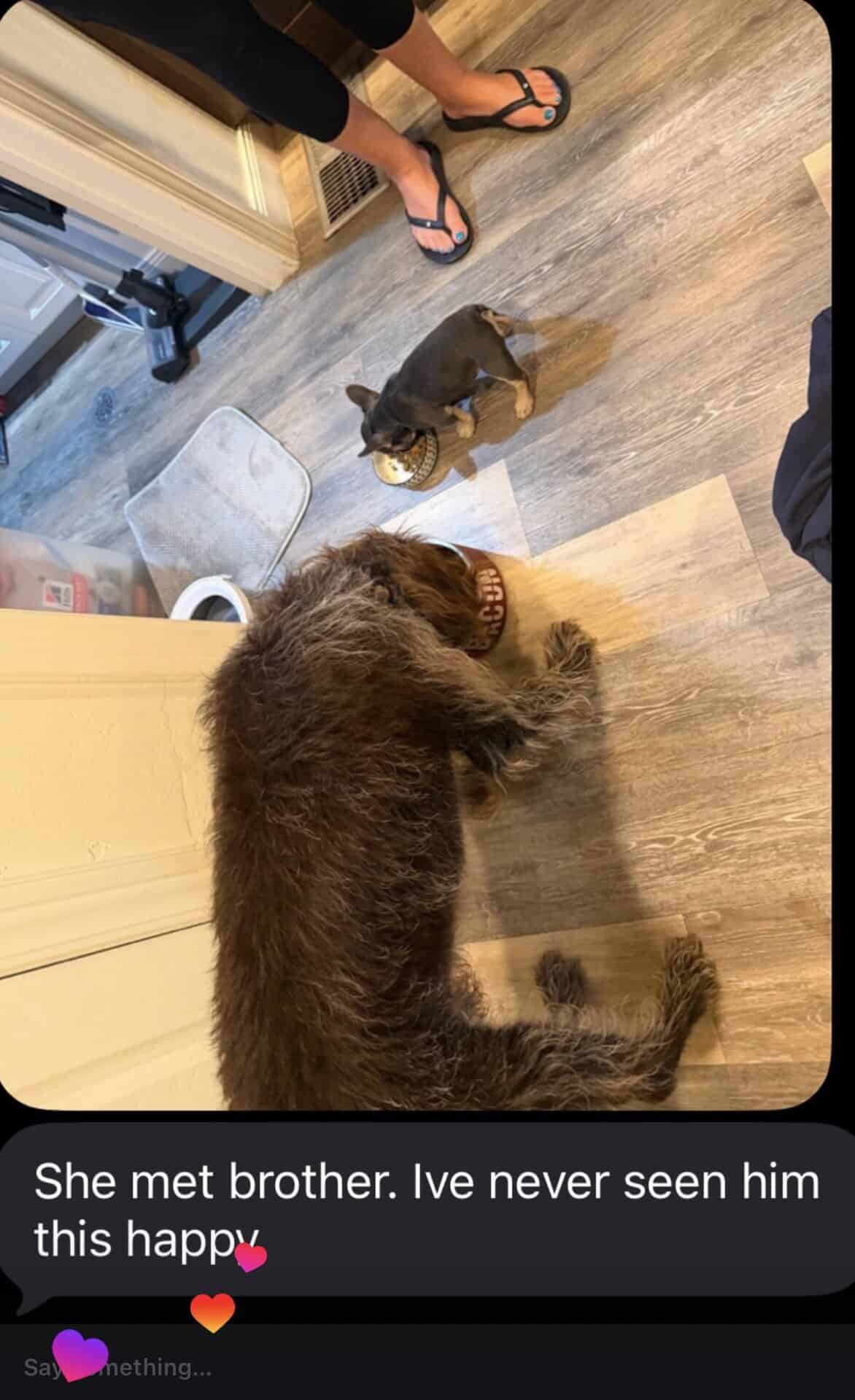
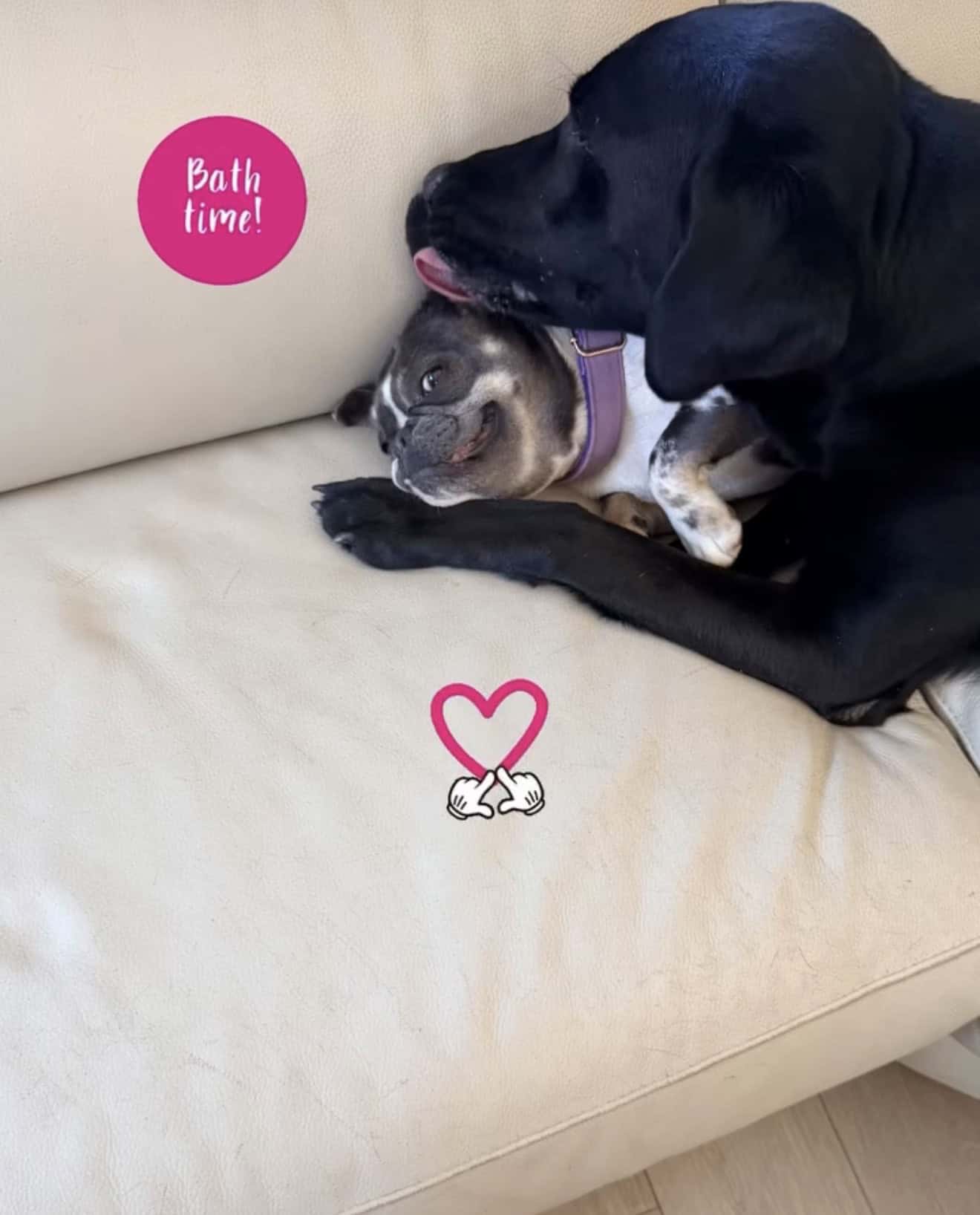
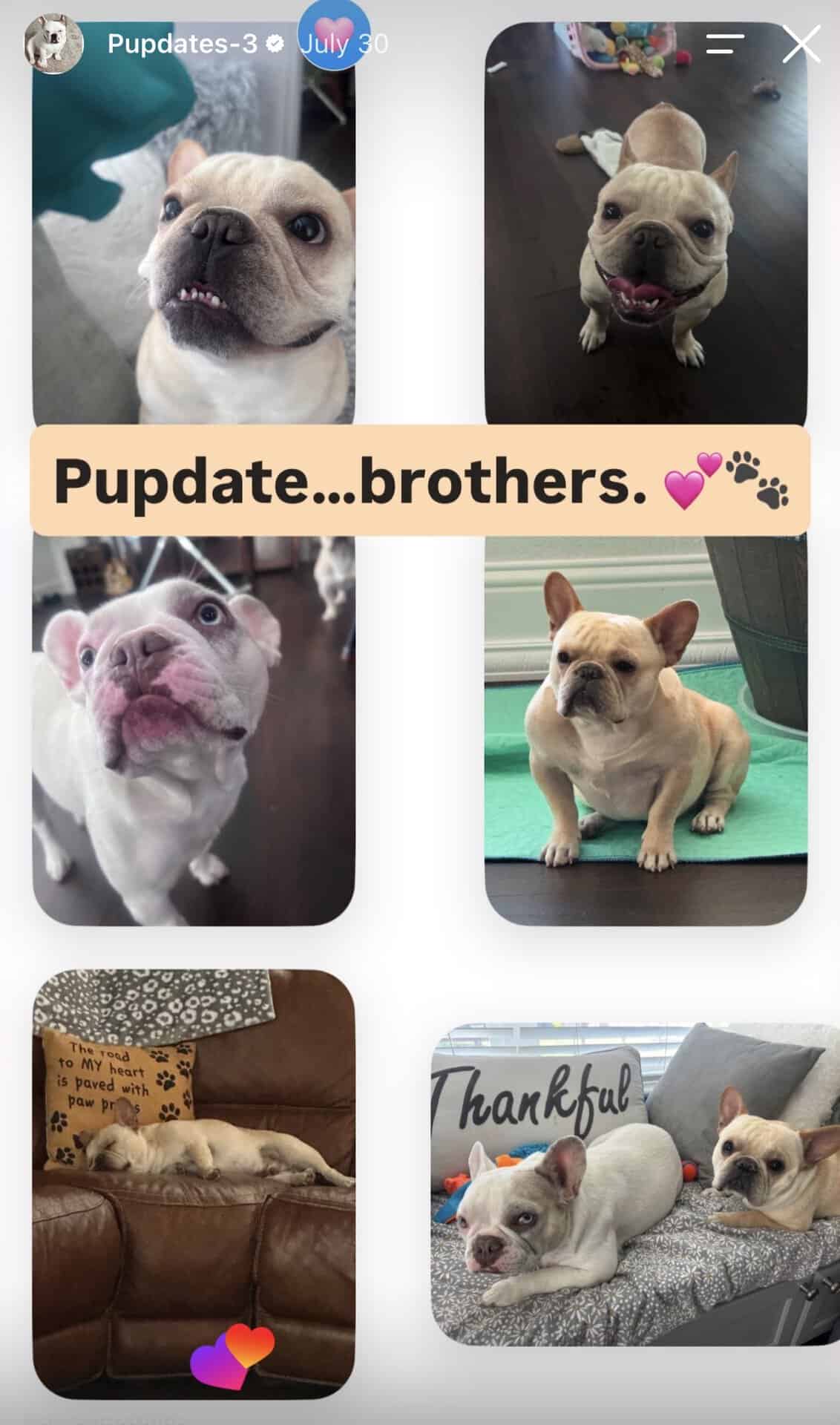
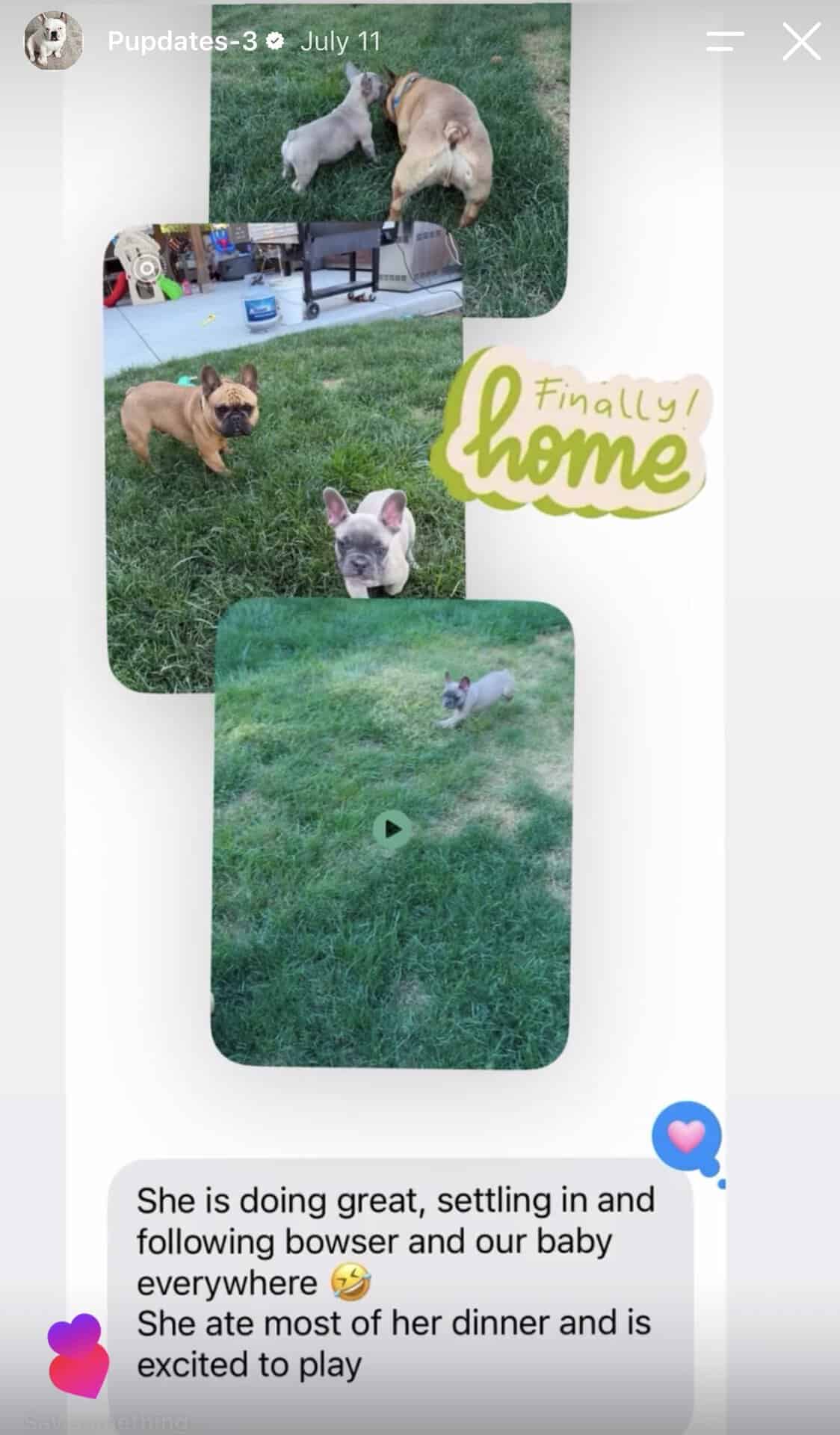
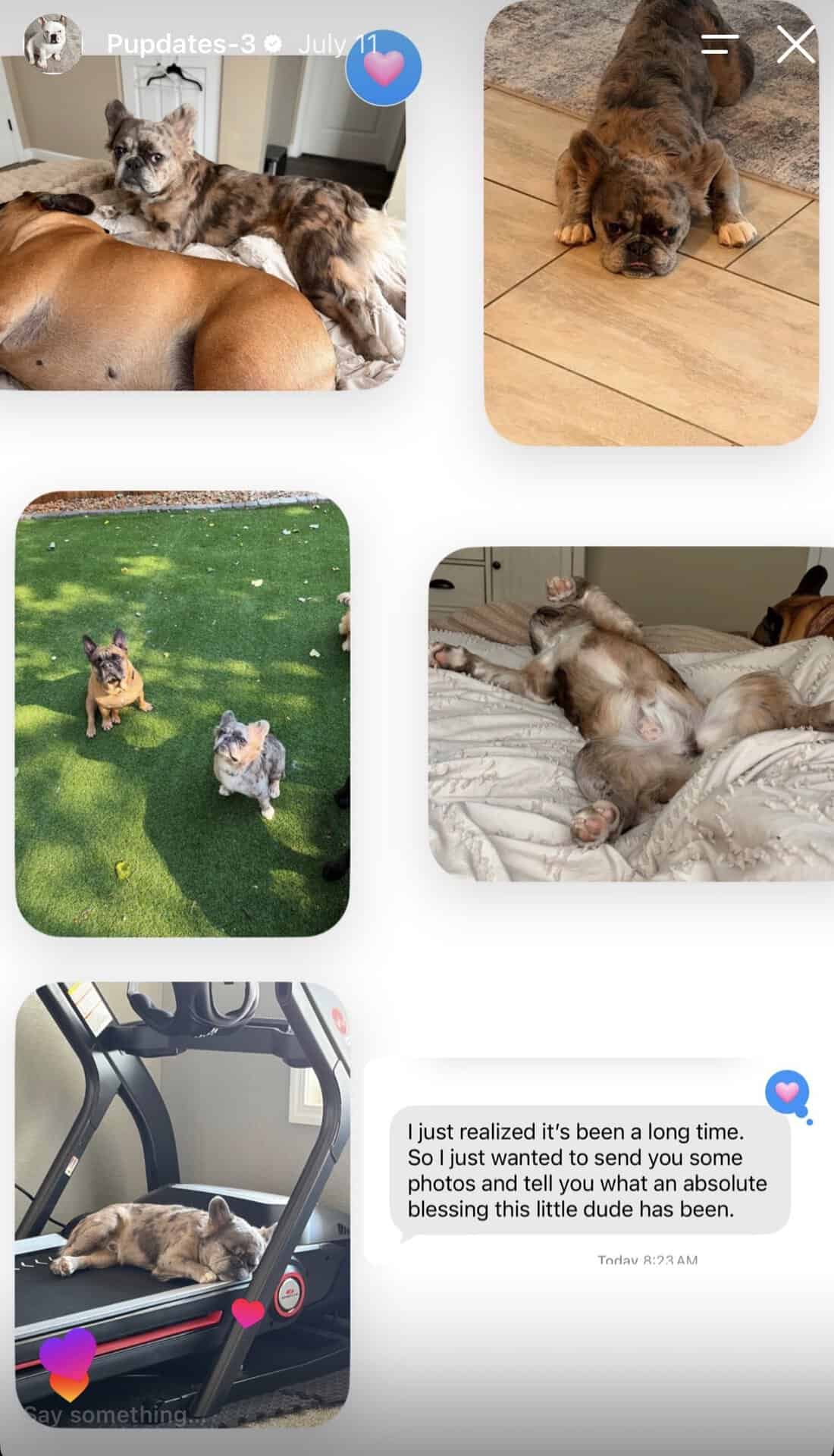
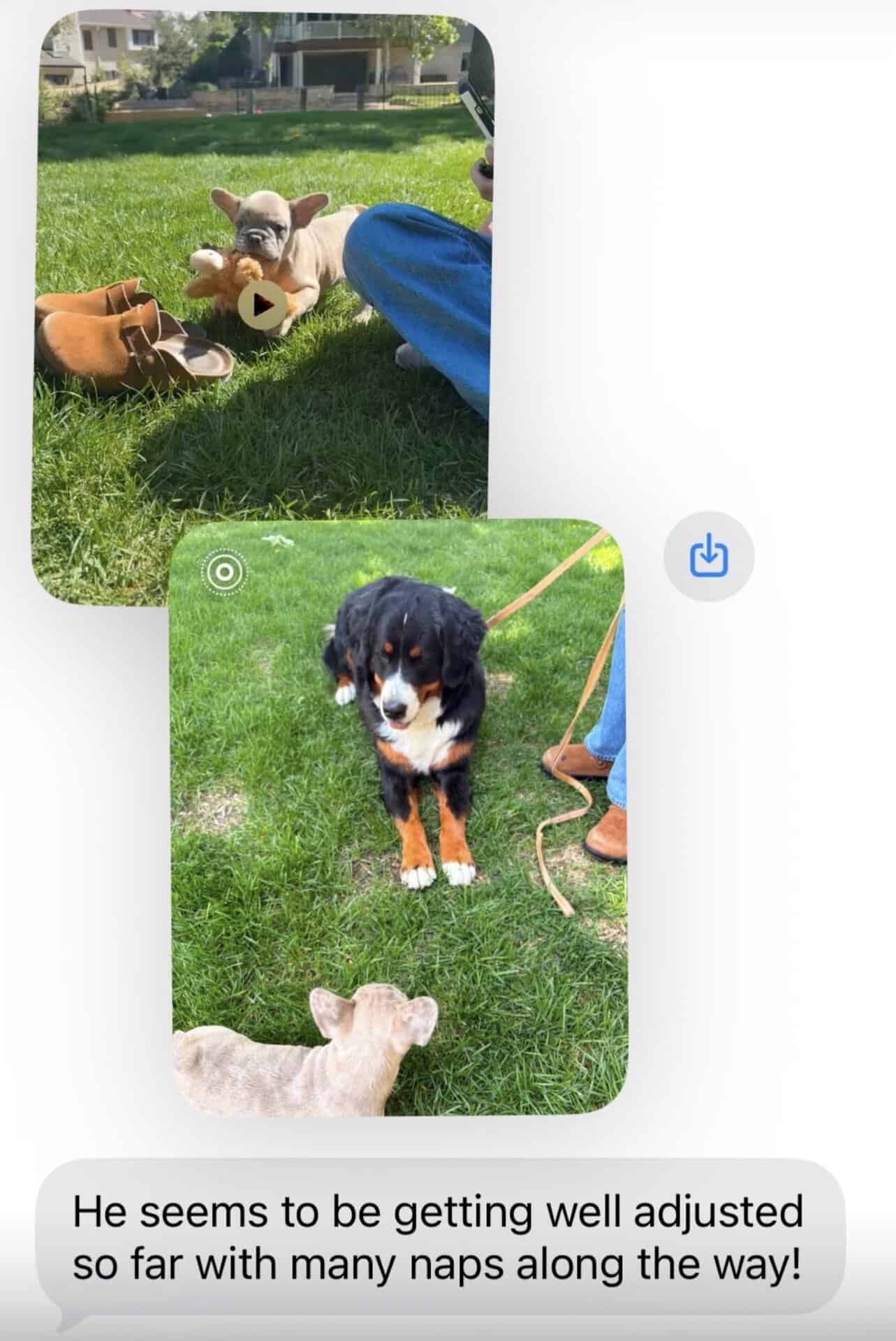
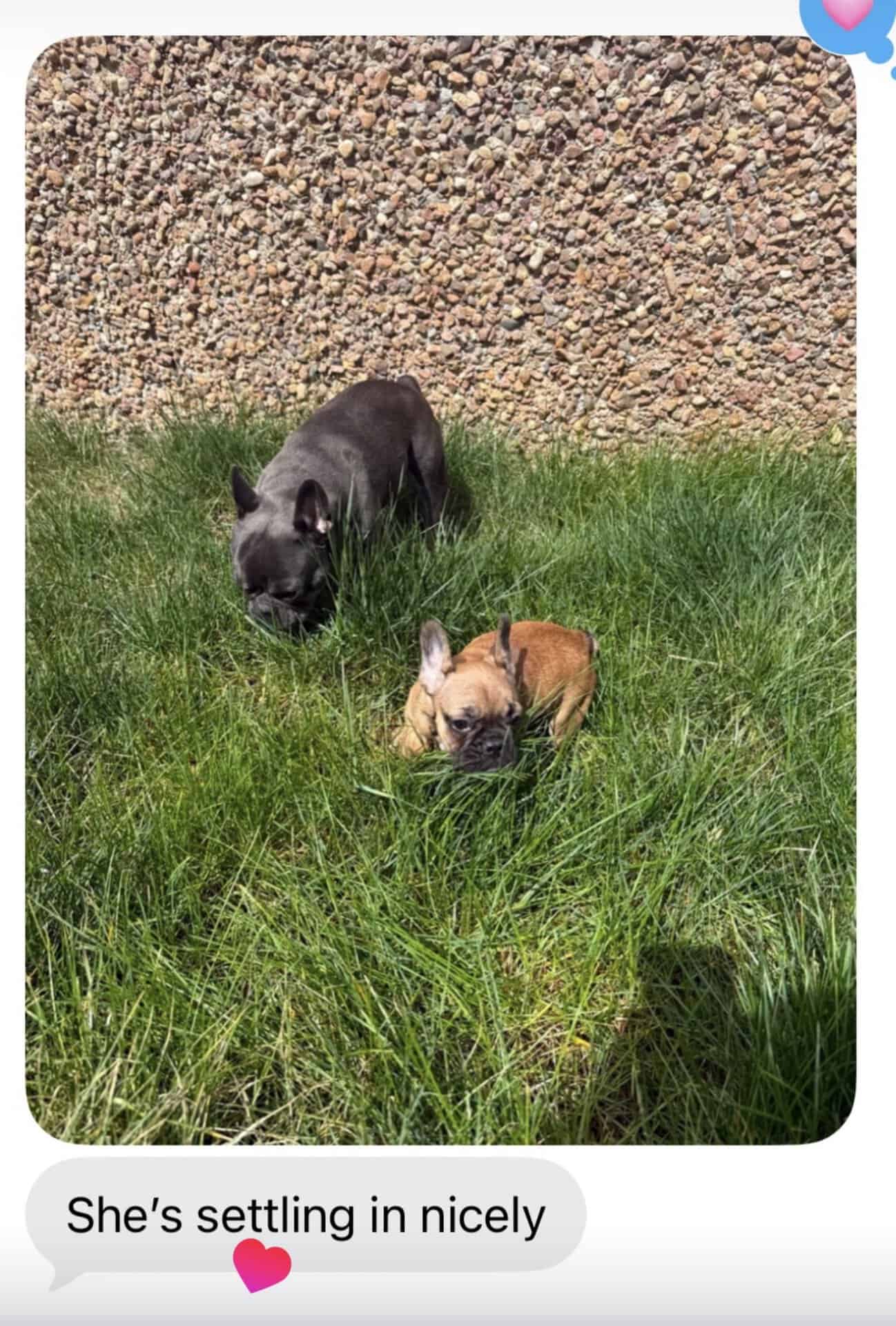
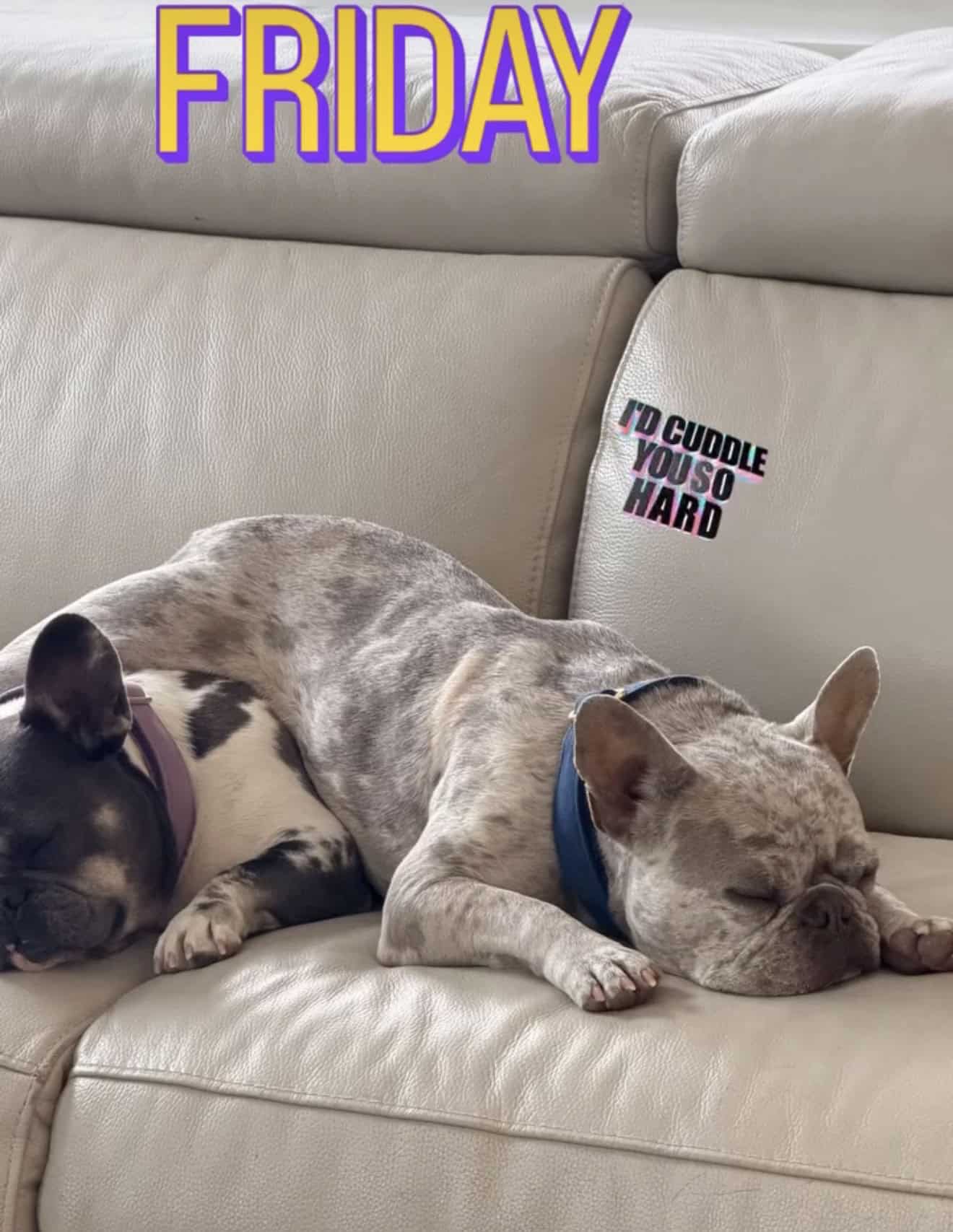
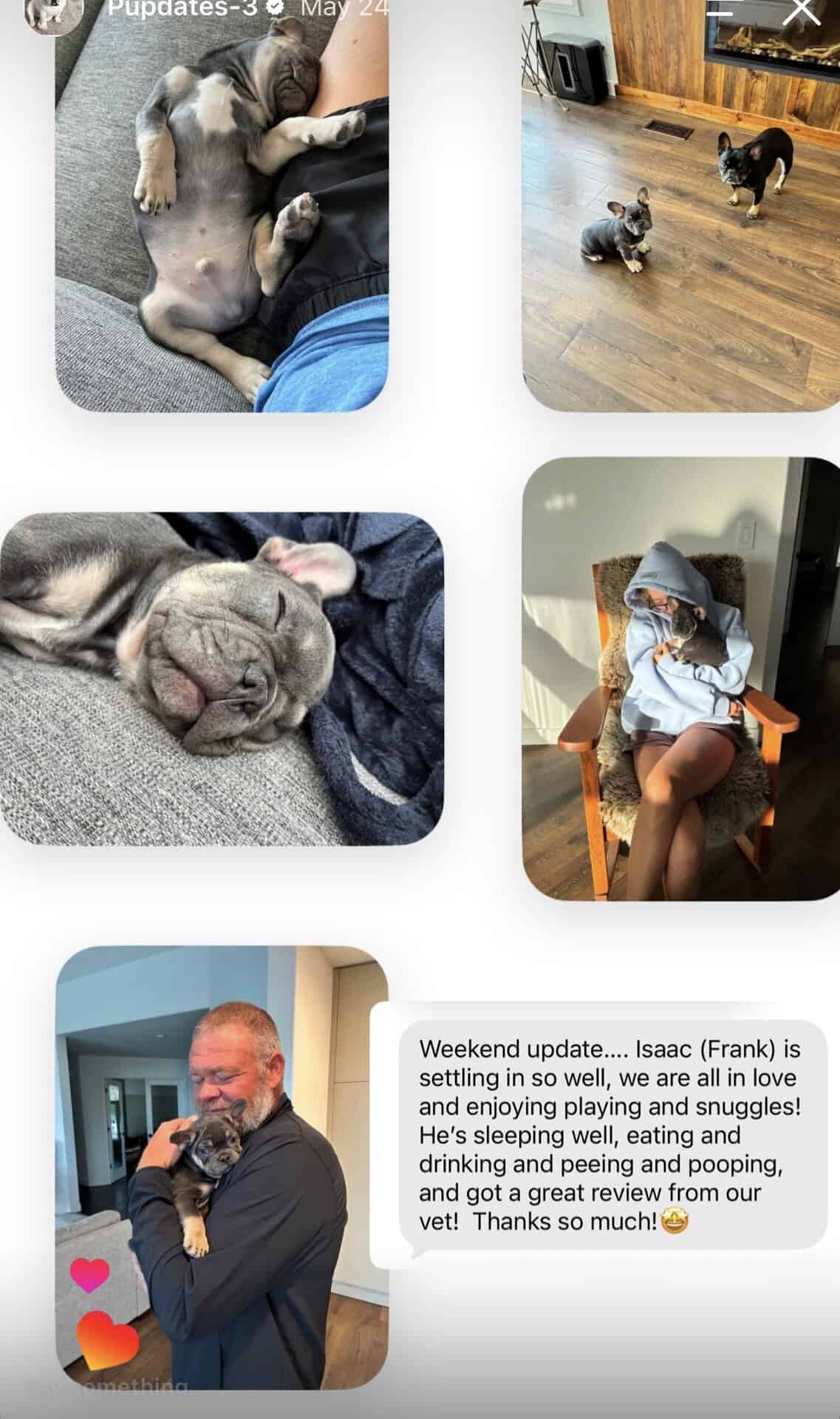
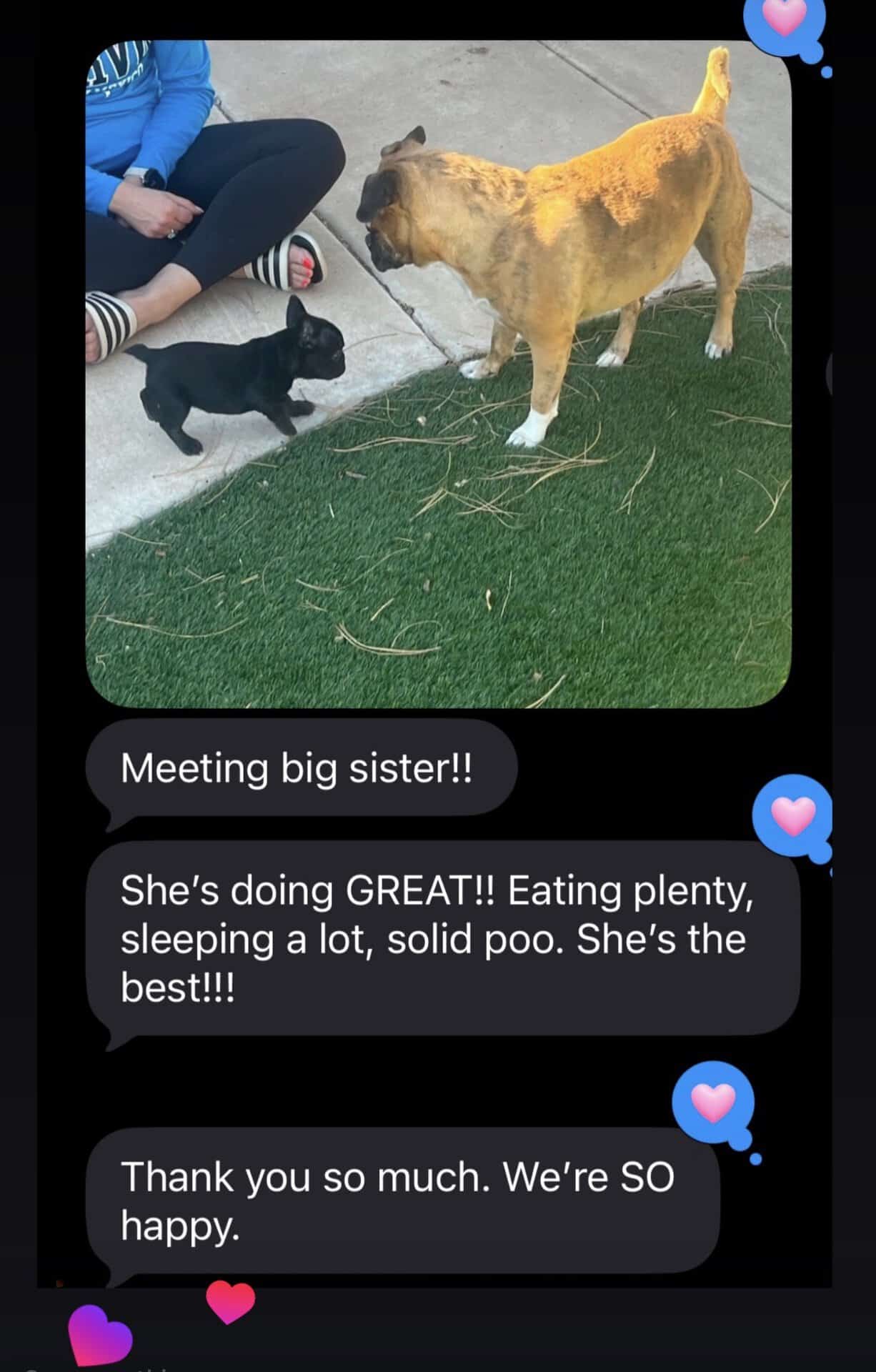
These are our puppies living with the dogs who were already home.
Find your dog's fur-sibling
Ready to add a Frenchie to your pack? See who's available now.
See available pups